

Crosswell VSP
In breve At a glance
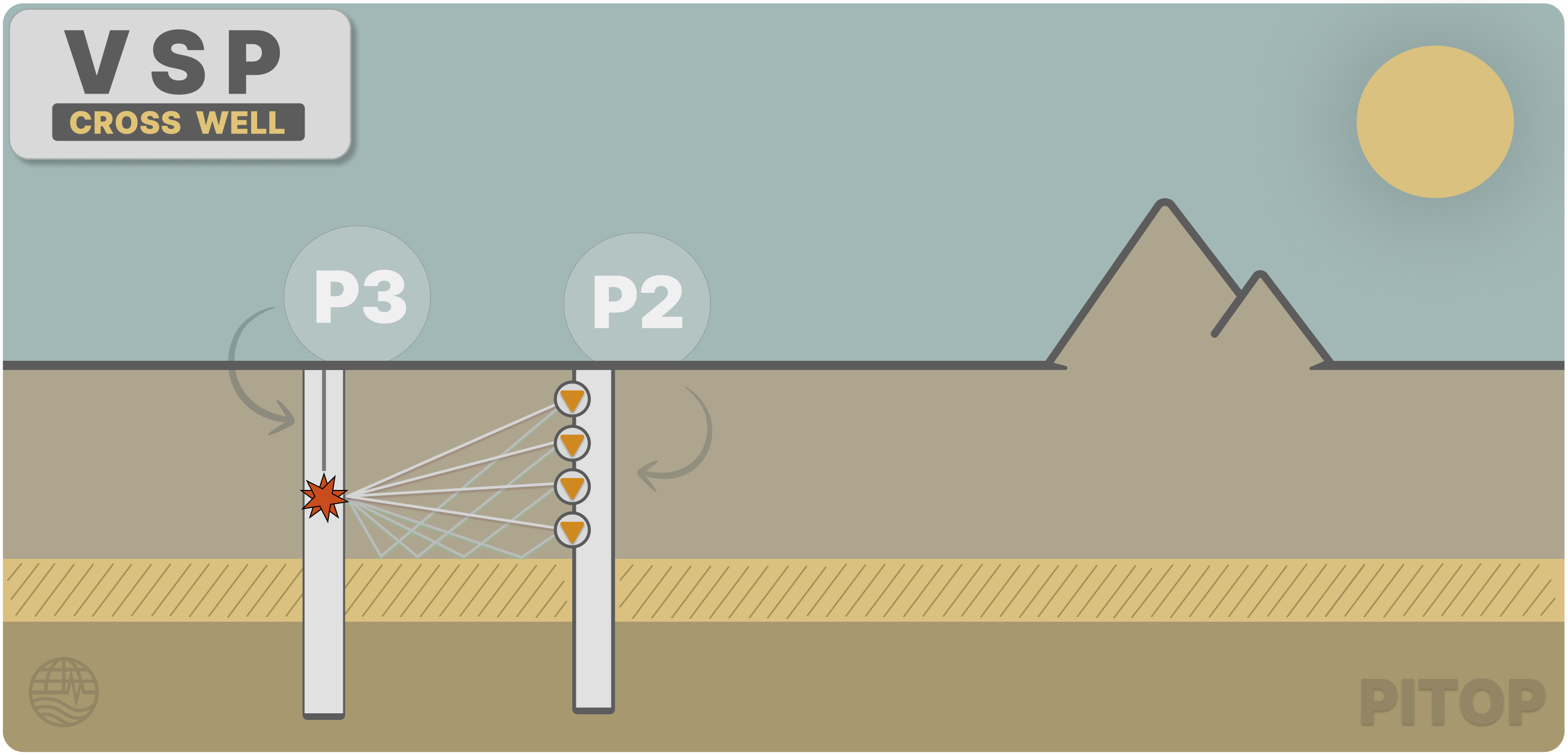
- Geometria: sorgente in un pozzo, ricevitori nell’altro (borehole-to-borehole). Geometry: source in one well, receivers in the other (borehole-to-borehole).
- Ricevitori: geofoni da pozzo o fibra ottica DAS installati in profondità. Receivers: downhole geophones or DAS optical fibre installed at depth.
- Output: tomografia onde P/S e stima delle proprietà elastiche tra i pozzi. Outputs: P/S-wave tomography and estimation of elastic properties between wells.
- Applicazioni: CO2, geotermia, caratterizzazione/monitoraggio del sottosuolo. Applications: CO2, geothermal, subsurface characterization/monitoring.
Nel contesto di PITOP, il metodo Crosswell VSP è stato applicato con successo tra i pozzi PITOP2 (ricevitori permanenti) e PITOP3 (sorgente), utilizzando airgun e sparker come sorgenti impulsive. I dati acquisiti sono stati impiegati per inversioni tomografiche delle onde P ed S, a supporto di studi di caratterizzazione di reservoir, monitoraggio dello stoccaggio della CO2 e valutazioni geotermiche. Le acquisizioni Crosswell VSP sono state inoltre integrate con tecniche di sismica a pozzo singolo e con metodi geoelettrici. At PITOP, the Crosswell VSP method has been successfully applied between wells PITOP2 (permanent receivers) and PITOP3 (source), using airgun and sparker as impulsive seismic sources. The acquired data have been used for P- and S-wave tomographic inversions, supporting reservoir characterization studies, CO2 storage monitoring and geothermal assessments. Crosswell VSP acquisitions have also been integrated with single-well seismic techniques and geoelectrical methods.
Se integrato con altri metodi geofisici e geoelettrici, il Crosswell VSP consente una caratterizzazione estremamente dettagliata dei volumi compresi tra i pozzi, risultando strategico per il monitoraggio di processi dinamici in progetti di stoccaggio della CO2, geotermia e altre applicazioni di sottosuolo profondo. When integrated with other geophysical and geoelectrical methods, Crosswell VSP provides an exceptionally detailed characterization of the volumes between wells, making it a strategic tool for monitoring dynamic processes in CO2 storage projects, geothermal applications and other deep subsurface investigations.